
If you follow many romance industry blogs, you're probably sick to death of hearing about Harlequin Horizons by now. It seems the denizens of Romancelandia have been talking of little else this week.
If you haven't heard, here's a quick primer: Harlequin Enterprises opened a new line called Harlequin Horizons. Unlike their other lines, like Harlequin Presents or Harlequin Blaze, this new line is a pay-to-play vanity publisher - instead of the publisher paying you for the right to publish your work, you are paying them to put it into print (just don't expect it to be stocked in bookstores).
Several aspects of this new enterprise caused a kerfuffle in the writing community. Brand dilution, preying on uneducated aspiring writers to monetize their slush pile, and the misleading verbiage on their sales pitch were all brought up as concerns by writers far and wide. (The thread at Smart Bitches was one epicenter of the discussion if you'd like to see various arguments re: HqHo. They were creeping up on 600 comments when I posted this.)
Romance Writers of America responded by announcing Harlequin was no longer considered an "eligible" publisher according to their definition of such, Mystery Writers of America threatened sanctions & Science Fiction Writers of America jumped into the fray with a statement of their own. Harlequin has now announced that they will be changing the name of Harlequin Horizons (perhaps because there is already a Horizons line in France?) to something less closely tied to their brand.
I'm sure there are still many developments to come and I predict that when everything shakes out, the effect of Horizons will not be as drastic as it originally seemed. Or maybe it'll be more drastic. What do I know?
My question for you is this: if you were a writer interested in publishing with a Harlequin line and you received a rejection letter which included a referral to a Harlequin vanity-publishing company asking you to pay hundreds of dollars to have your book printed, how would you feel? Would you be tempted? Insulted? Would it impact your willingness to submit to Harlequin again in the future? As a writer being targeted by what some are calling predatory business practices, would you feel preyed upon? How do you think Harlequin Horizons will impact Harlequin's reputation in the long run, if at all? Anyone care to speculate?
Showing posts with label romance rant. Show all posts
Showing posts with label romance rant. Show all posts
Friday, November 20, 2009

Friday, April 17, 2009
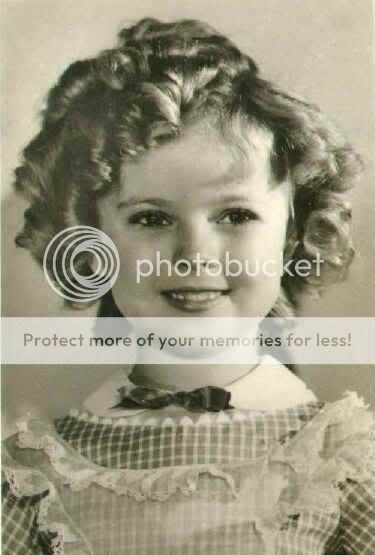
The Shirley Temple Effect
 It seems that our crummy economy will have a negative impact on our most beloved pastime: reading. That's right, folks. The chief financial officer at Barnes & Noble predicted that book sales will fall between 4 and 6 percent this year.
The good news? (Yes, there's good news!) Romance sales are apparently on the rise. In a recent NY Times article, Motoko Rich reported that the first three months of 2009 saw a 2.4 increase in romance sales. In 2008, romance sales rose 7% after holding steady for four years. And these numbers don't even take into account the books sold at discount chains like Wal-Mart or Target.
The silver sales lining actually extends beyond romance novels. Other industries getting a bump include: chocolate, garden seeds, fast food, and condoms. Make of that what you will!
Of course, my interest is in the increased romance sales. Our genre's popularity is actually raising a few journalistic eyebrows. In addition to Rich, the trend's been followed by Misty Harris at the Vancouver Sun, who mostly discusses renewed academic interest in romance. Both articles are definitely worth reading!
Of course, there are a few reporters who can't resist jabbing at the genre even as they report its successes. Has anyone else noticed this? The underlying snark? It's not too hard to read between the lines when a reporter proudly states that he/she never reads romance novels... and then launches into a critique of the fact that they're "formulaic," "overwrought" or "underdeveloped."
I can't help it. It bugs me. I also have to wonder: where does a self-proclaimed non-romance reader get the authority to dismiss the entire genre?
True, I've read some "overwrought and underdeveloped" romance novels. But I've also read "overwrought and underdeveloped" crud in every other form of writing. Do people dismiss general fiction as a whole after reading several self-indulgent, navel-gazer novels?
I think not.
I also think, as the economy continues to... wobble... that it will grow increasingly difficult to "poke fun" at romance novels. Our genre's popularity will increase. Why? For the same reason that Shirley Temple was such a hit during the Depression: people need a way to set their stress aside, and she was dimpled and cute and uncomplicated. Believe it or not, FDR actually said that "as long as our country has Shirley Temple, we will be all right."
I don't know about our whole country... but I do know that romance novels keep me in an "all right" state of mind. My already stressful teaching job is much worse now that I have to beg, borrow, and steal basic office supplies. It's nice to know that I can unwind with a guaranteed happy ending. Romance novels: the modern Shirley Temple!
If you're also blogging about the economy, please link to us so we can take part in the larger discussion! What do you think? Are romance novels the new Good Ship Lollipop? Or maybe you just want to tell us about your creative use for garden seeds and condoms...
Monday, July 10, 2006
Late, As Usual
I'm coming late to the recent no-hold-barred discussion about snark and reviews that waged across the romance blogosphere (no surprise for anyone with first hand knowledge of my time-keeping skills). Kate D. did an admirable job of keeping all damned scribblers up to date on the dispute and adding her own judicious opinion to the mess.
Recently, though, I've been thinking of that debate in context of the reviews on this site. I love reading snark. I visit Television Without Pity regularly. I've long been a fan of Mrs. Giggles and the Smart Bitches. They're funny! They write well. They can be mean, no question, but they make me laugh.
And they get a lot of web traffic. Far more than humble little Damned Scribbling Women. I can see why. Romance reviews--and specifically, funny, biting reviews--will appeal to far more people than the assortment of writing updates, reviews, links and rants we feature. But I don't write that way, and it's not because I'm incapable of the art of the humorous put down or because I like everything I read or because I'm just so sweet and sugary all the time and think the world is made of candy and rainbows.
For the most part, I only write reviews of books I liked. I read a lot of other books, some quite stinky, some merely mediocre, but I don't review them. It's partly because I don't enjoy revisiting a subpar book if I don't have to. But it's also, on a more cynical level, because my goal in this industry is not to be a reviewer or run a great website. It's to be a writer.
We've all heard the horror stories about ill-conceived emails that cost people jobs or dates or friends. About blogs and websites that came to the notice of employers. I hope to become a peer to the women whose books I review, and I know this website will live on in some fashion long after Kate and I accomplish our goals. So I try to review as though I am already their peer, a fellow author.
Fortunately, the web is big enough for everyone and for all kinds of reviews and voices. We can each find her particular poison, whether it's smart reviews of "trashy" books or recommendations from published authors or a sanctuary for readers or the sporadic musings of two unpublished wannabes.
Kate's philosophy may be a little different than mine (and I hope she'll elaborate in the comments), but this is what guides my reviewing. Other bloggers, what guides yours?
Recently, though, I've been thinking of that debate in context of the reviews on this site. I love reading snark. I visit Television Without Pity regularly. I've long been a fan of Mrs. Giggles and the Smart Bitches. They're funny! They write well. They can be mean, no question, but they make me laugh.
And they get a lot of web traffic. Far more than humble little Damned Scribbling Women. I can see why. Romance reviews--and specifically, funny, biting reviews--will appeal to far more people than the assortment of writing updates, reviews, links and rants we feature. But I don't write that way, and it's not because I'm incapable of the art of the humorous put down or because I like everything I read or because I'm just so sweet and sugary all the time and think the world is made of candy and rainbows.
For the most part, I only write reviews of books I liked. I read a lot of other books, some quite stinky, some merely mediocre, but I don't review them. It's partly because I don't enjoy revisiting a subpar book if I don't have to. But it's also, on a more cynical level, because my goal in this industry is not to be a reviewer or run a great website. It's to be a writer.
We've all heard the horror stories about ill-conceived emails that cost people jobs or dates or friends. About blogs and websites that came to the notice of employers. I hope to become a peer to the women whose books I review, and I know this website will live on in some fashion long after Kate and I accomplish our goals. So I try to review as though I am already their peer, a fellow author.
Fortunately, the web is big enough for everyone and for all kinds of reviews and voices. We can each find her particular poison, whether it's smart reviews of "trashy" books or recommendations from published authors or a sanctuary for readers or the sporadic musings of two unpublished wannabes.
Kate's philosophy may be a little different than mine (and I hope she'll elaborate in the comments), but this is what guides my reviewing. Other bloggers, what guides yours?
Friday, June 23, 2006
Snarkilepsy: a LONG rant
Audience or author: that is the question:
Whether 'tis nobler in the mind to suffer
The slings and arrows of outrageous blog posts
Or to take arms against a sea of critics
And by opposing... multiply them?
Picture this: Changeling Press has just published the bard’s latest masterpiece, the erotic novel Shrew Taming. The cover portrays a muscled naked man (clearly CG) walking through flames (also clearly CG). Petruchio, perhaps? Whoever it’s supposed to be, the cover strikes you as ugly. You immediately make fun of it on your blog and, since you get so much site traffic, Shakespeare hears about it. Should he:
(a) address your comments on his own site;
(b) briefly and intelligently respond to your blog post;
(c) spend hours of his day torpedoing you (and any other potential readers who dare criticize any aspect of his work);
(d) ignore the Internet entirely as he composes his next masterpiece?
This may seem like a rhetorical question because, of course, Shakespeare hasn’t been exhumed to write erotica. But since modern authors must negotiate so much online criticism, it’s not rhetorical at all to ask yourself about bad reviews, rumor-mongering, and cover snark. Bloggers: how much is too much? Authors: what’s the appropriate response to critique?
Put on your seatbelts, readers. It's going to be a long and bumpy rant.
I’ll be the first to admit that I love intelligent snark. This is one of the reasons DSW heartily recommends you to follow the Smart Bitches link in our sidebar—their Ranty McRants defend our right to mock everything about the genre we love, from the medieval cover models sporting eye-shadow to the virgin secretaries who suffer amnesia after being knocked up by dashing Arabian sheiks. And if you don’t feel like producing your own criticism, satisfy yourself by reading theirs: it’s intelligent, it’s funny, and it’s clearly rooted in love for the genre’s authors and readers. (Similarly savvy soapbox thoughts to be found from Mrs. Giggles.)
Lately, the snark has spread. In fact, Karen S’s post about Changeling Press prompted a snark storm. Some of the writers’ responses prompted Indida to post this little diatribe about the relationship between readers and writers. And an anonymous someone clearly thought that the blog rants were getting out of hand, because she’s decided to criticize people who criticize other people. Sweet lord, folks: meta-snark.
I don’t know how to feel about all of this. On the one hand, I love a good blog post that sparks intriguing debate. On the other hand, I know that—regardless of whether or not I like her novels—a writer’s process and efforts deserve some respect. So, is it possible to simultaneously value and mock the romance genre? I think so. After all, a sense of humor and perspective does wonders in any aspect of life.
I’ve come late to the debate, but I can’t resist putting on my Civics Teacher Hat to share some of my thoughts:
To everyone who has an opinion: good for you. I hope you exercise your First Amendment rights and shout whatever you’re thinking to the intrigued masses. With that in mind, though, might I make a suggestion? Consider the purpose and potential impact of your words before they go public.
Put another way: don’t dish it out if you can’t take it.
To readers: Authors don’t “owe” you anything except their best possible work. If you have a blog then, by all means, critique away. As a reader, I especially appreciate other readers who give me information I can use. That said, if you absolutely can't stand an author, tell us once and then stop reading her. It's really that simple. Yes, authors are responsible for the gems and the dross that they produce—but as a consumer, you are responsible for whatever’s lurking in your TBR pile.
Indida, I thought your blog post was funny as hell, but I disagree with you. Yes, authors provide a service—but that doesn’t make them servile. Teachers and doctors also provide services, but shouldn't we respect the time, money, effort and education they’ve invested in their craft? I believe authors deserve the same respect. After all, they spend countless hours creating a novel, seeing it through publication, and enduring the reviews. That can’t be easy.
To authors: Please keep in mind that readers have a right to critically evaluate the texts that you provide—be they best-selling novels or blustering blog posts. Once it’s out in the world, it’s available for public consumption and critique. Specifically on blog posting: anything you say can and will be used against you in the court of the cash register! Your blog entries and comments become part of your public persona; which can help you (Angelina fights child poverty!) or hurt you (Author fights free speech!)
Don't get me wrong, though. I believe in your right to defend your work. There’s nothing I love more than an author’s salty, intelligent response to her critics. Just keep in mind that messy, incoherent outbursts tend to alienate people. Just look at what happened to Tom Cruise post-Oprah: he went from “A-List Box Office Sure, Sexy Thing” to “That Crazy Dude Who Jumps on Couches and Can’t Carry a Summer Blockbuster.”
(a) address your comments on his own site;
(b) briefly and intelligently respond to your blog post;
(c) spend hours of his day torpedoing you (and any other potential readers who dare criticize any aspect of his work);
(d) ignore the Internet entirely as he composes his next masterpiece?
This may seem like a rhetorical question because, of course, Shakespeare hasn’t been exhumed to write erotica. But since modern authors must negotiate so much online criticism, it’s not rhetorical at all to ask yourself about bad reviews, rumor-mongering, and cover snark. Bloggers: how much is too much? Authors: what’s the appropriate response to critique?
Put on your seatbelts, readers. It's going to be a long and bumpy rant.
I’ll be the first to admit that I love intelligent snark. This is one of the reasons DSW heartily recommends you to follow the Smart Bitches link in our sidebar—their Ranty McRants defend our right to mock everything about the genre we love, from the medieval cover models sporting eye-shadow to the virgin secretaries who suffer amnesia after being knocked up by dashing Arabian sheiks. And if you don’t feel like producing your own criticism, satisfy yourself by reading theirs: it’s intelligent, it’s funny, and it’s clearly rooted in love for the genre’s authors and readers. (Similarly savvy soapbox thoughts to be found from Mrs. Giggles.)
Lately, the snark has spread. In fact, Karen S’s post about Changeling Press prompted a snark storm. Some of the writers’ responses prompted Indida to post this little diatribe about the relationship between readers and writers. And an anonymous someone clearly thought that the blog rants were getting out of hand, because she’s decided to criticize people who criticize other people. Sweet lord, folks: meta-snark.
I don’t know how to feel about all of this. On the one hand, I love a good blog post that sparks intriguing debate. On the other hand, I know that—regardless of whether or not I like her novels—a writer’s process and efforts deserve some respect. So, is it possible to simultaneously value and mock the romance genre? I think so. After all, a sense of humor and perspective does wonders in any aspect of life.
I’ve come late to the debate, but I can’t resist putting on my Civics Teacher Hat to share some of my thoughts:
To everyone who has an opinion: good for you. I hope you exercise your First Amendment rights and shout whatever you’re thinking to the intrigued masses. With that in mind, though, might I make a suggestion? Consider the purpose and potential impact of your words before they go public.
Put another way: don’t dish it out if you can’t take it.
To readers: Authors don’t “owe” you anything except their best possible work. If you have a blog then, by all means, critique away. As a reader, I especially appreciate other readers who give me information I can use. That said, if you absolutely can't stand an author, tell us once and then stop reading her. It's really that simple. Yes, authors are responsible for the gems and the dross that they produce—but as a consumer, you are responsible for whatever’s lurking in your TBR pile.
Indida, I thought your blog post was funny as hell, but I disagree with you. Yes, authors provide a service—but that doesn’t make them servile. Teachers and doctors also provide services, but shouldn't we respect the time, money, effort and education they’ve invested in their craft? I believe authors deserve the same respect. After all, they spend countless hours creating a novel, seeing it through publication, and enduring the reviews. That can’t be easy.
To authors: Please keep in mind that readers have a right to critically evaluate the texts that you provide—be they best-selling novels or blustering blog posts. Once it’s out in the world, it’s available for public consumption and critique. Specifically on blog posting: anything you say can and will be used against you in the court of the cash register! Your blog entries and comments become part of your public persona; which can help you (Angelina fights child poverty!) or hurt you (Author fights free speech!)
Don't get me wrong, though. I believe in your right to defend your work. There’s nothing I love more than an author’s salty, intelligent response to her critics. Just keep in mind that messy, incoherent outbursts tend to alienate people. Just look at what happened to Tom Cruise post-Oprah: he went from “A-List Box Office Sure, Sexy Thing” to “That Crazy Dude Who Jumps on Couches and Can’t Carry a Summer Blockbuster.”
Everyone, let this be your couch-jumping cautionary tale: don’t succumb to the Tom Cruise Overshare.
Saturday, May 06, 2006
"Romance," circa 1983
Hint, dear publishers: “no” means “no.”
I was glowing with excitement when the vintage writing book fell into my possession—after all, I love gendered advice books from bygone eras. Sadly, though, some of the writing advice was so distasteful that I couldn’t even label it as “quaint.” Instead, it angered me. For instance:
The most innocent of romances implies that the hero, if he so desires, can rape the heroine. The reader must be aware that the hero is free to do with the heroine as he likes. His size in comparison to hers helps to remind us that he is in control. That he doesn’t take advantage of her characterizes him and shows how truly he loves her.
Um… excuse me?! So, the hero should somehow score nice guy points because he doesn’t commit a degrading and illegal assault on the heroine? I don’t think so! Picture me vomiting. Then picture me reading onward with increasing horror as I was advised:
The reader must not feel disgusted by the actual rape scene. Early in the “bodice-ripper” romance plot, the heroine is usually raped by the hero; and we must remain sympathetic with both characters…These rapes are more acts of passion than of violence, and we mustn’t feel as we would while reading about an actual rape.[1]
Newsflash, people: rape is rape. It’s never okay, and I can pretty much guarantee that if your novel contains a forced sex scene, I’m going to spend the rest of the book waiting for the heroine to press charges and slap the "hero’s" ass in jail.
How’s that for disgust?
To be fair, I think the genre has come a long way in the twenty-plus years since this writing book was published. But reading this dated, appalling “advice” only serves to remind me that we still have work to do. I’m still reading too many stories about sissy heroines who find their hero’s domineering ways appropriate, attractive, and manly. I’m still reading about supposedly hot “anger sex” that treads a fine line between consensual and… well, something quite icky.*
Alpha males are one thing, folks, but reinforcing dangerous stereotypes and behavior—that’s something else, entirely.
* * * * *
[1] Marilyn M. Lowery, How to Write Romance Novels that Sell (Macmillan Publishing Company, New York) 1983, p.75.
* My definition of supposedly hot anger sex: Usually occurs in a historical when the hero comes home from some sort of physical altercation. His blood lust is up, he basically ravages his wife, then goes into a total shame spiral only to discover that the little woman “likes it rough.” She, of course, would never think to ask for a tempestuous quickie… she merely participate when her husband initiates. Is it just me, or is there a squick factor here?
Monday, July 25, 2005
Three Events
There is such a difference between knowing and feeling. I know I should be unashamed of my reading tastes, and yet...
I deplore the fact that being woman-like, enjoying female things, is still denigrated and considered inferior in our society. I don't believe that romance novels are, of necessity, any worse than any other genre or form of literature, and they're certainly more entertaining than most. I just wish other intelligent, generally right-thinking adults could be made to understand that, as well.
There were a few turning points in my still-incomplete evolution as a reader (and burgeoning writer) of romance. The first was finding other intelligent women who were not ashamed to admit what they read in their free-time. My best friend, a marvelous young lady with whom you are well-acquainted, a doctor-in-training and history scholar, was the first of my friends to proudly discuss romance novels, and read them in public. Now I knew that this woman was one of the most intelligent people I've ever known. EVERYONE who meets her knows that. So anyone who could question her mind just because she likes romance novels...is obviously blinded by their biases.
Another turning point was an interview on NPR with Eloisa James. I've long been an admirer of hers. Of her books and of her ability to balance being a full-time professor of English with her writing and family life. Even Caroline Bingley would be forced to admit that Eloisa James is a truly accomplished woman. And yet the (woman) interviewer on NPR was laughingly dismissive of Eloisa's writing, labelling her books "bodice rippers" despite Eloisa's refusal to accept that term. The interview was polite, but I was shocked that a woman, a journalist with as fine an institution as NPR, could so obviously style herself as superior to a woman with Eloisa's background and successes just because she writes romance.
FInally, I was lucky enough to attend a romance industry convention in April and to meet many authors of all sub-genres of romance. Established legends, popular newer writers, up-and-comers and debut authors. College-educated women, graduate degree holders and those with only a high school degree. Women with full-time jobs outside their writing, with families, women who make their living writing full-time, and younger, single women. They were an amazingly diverse group, from all over the country. One thing they all held in common, though, was their excitement about and love of books and their intelligence. These women were friendly, warm and above all, interesting to talk with...about more than just writing.
I like to think that I've put together an informal support group for myself. And that each woman I introduce to romance (most recent convert was just last year) becomes another support bolstering up my fragile but determined resolve to stop feeling guilty and start feeling proud.
Maybe we can't change people's opinions about the genre in the abstract. But if people who know us, who know we're smart and motivated and sophisticated, learn that this is what we do, maybe they'll stop and think the next time they want to dismiss an entire sector of the publishing industry, or genre of film, or type of tv show without even checking it out first. And especially if they want to pretend to understand something fundamental about the people who enjoy said cultural product.
I deplore the fact that being woman-like, enjoying female things, is still denigrated and considered inferior in our society. I don't believe that romance novels are, of necessity, any worse than any other genre or form of literature, and they're certainly more entertaining than most. I just wish other intelligent, generally right-thinking adults could be made to understand that, as well.
There were a few turning points in my still-incomplete evolution as a reader (and burgeoning writer) of romance. The first was finding other intelligent women who were not ashamed to admit what they read in their free-time. My best friend, a marvelous young lady with whom you are well-acquainted, a doctor-in-training and history scholar, was the first of my friends to proudly discuss romance novels, and read them in public. Now I knew that this woman was one of the most intelligent people I've ever known. EVERYONE who meets her knows that. So anyone who could question her mind just because she likes romance novels...is obviously blinded by their biases.
Another turning point was an interview on NPR with Eloisa James. I've long been an admirer of hers. Of her books and of her ability to balance being a full-time professor of English with her writing and family life. Even Caroline Bingley would be forced to admit that Eloisa James is a truly accomplished woman. And yet the (woman) interviewer on NPR was laughingly dismissive of Eloisa's writing, labelling her books "bodice rippers" despite Eloisa's refusal to accept that term. The interview was polite, but I was shocked that a woman, a journalist with as fine an institution as NPR, could so obviously style herself as superior to a woman with Eloisa's background and successes just because she writes romance.
FInally, I was lucky enough to attend a romance industry convention in April and to meet many authors of all sub-genres of romance. Established legends, popular newer writers, up-and-comers and debut authors. College-educated women, graduate degree holders and those with only a high school degree. Women with full-time jobs outside their writing, with families, women who make their living writing full-time, and younger, single women. They were an amazingly diverse group, from all over the country. One thing they all held in common, though, was their excitement about and love of books and their intelligence. These women were friendly, warm and above all, interesting to talk with...about more than just writing.
I like to think that I've put together an informal support group for myself. And that each woman I introduce to romance (most recent convert was just last year) becomes another support bolstering up my fragile but determined resolve to stop feeling guilty and start feeling proud.
Maybe we can't change people's opinions about the genre in the abstract. But if people who know us, who know we're smart and motivated and sophisticated, learn that this is what we do, maybe they'll stop and think the next time they want to dismiss an entire sector of the publishing industry, or genre of film, or type of tv show without even checking it out first. And especially if they want to pretend to understand something fundamental about the people who enjoy said cultural product.
Subscribe to:
Posts (Atom)

 Posts
Posts

